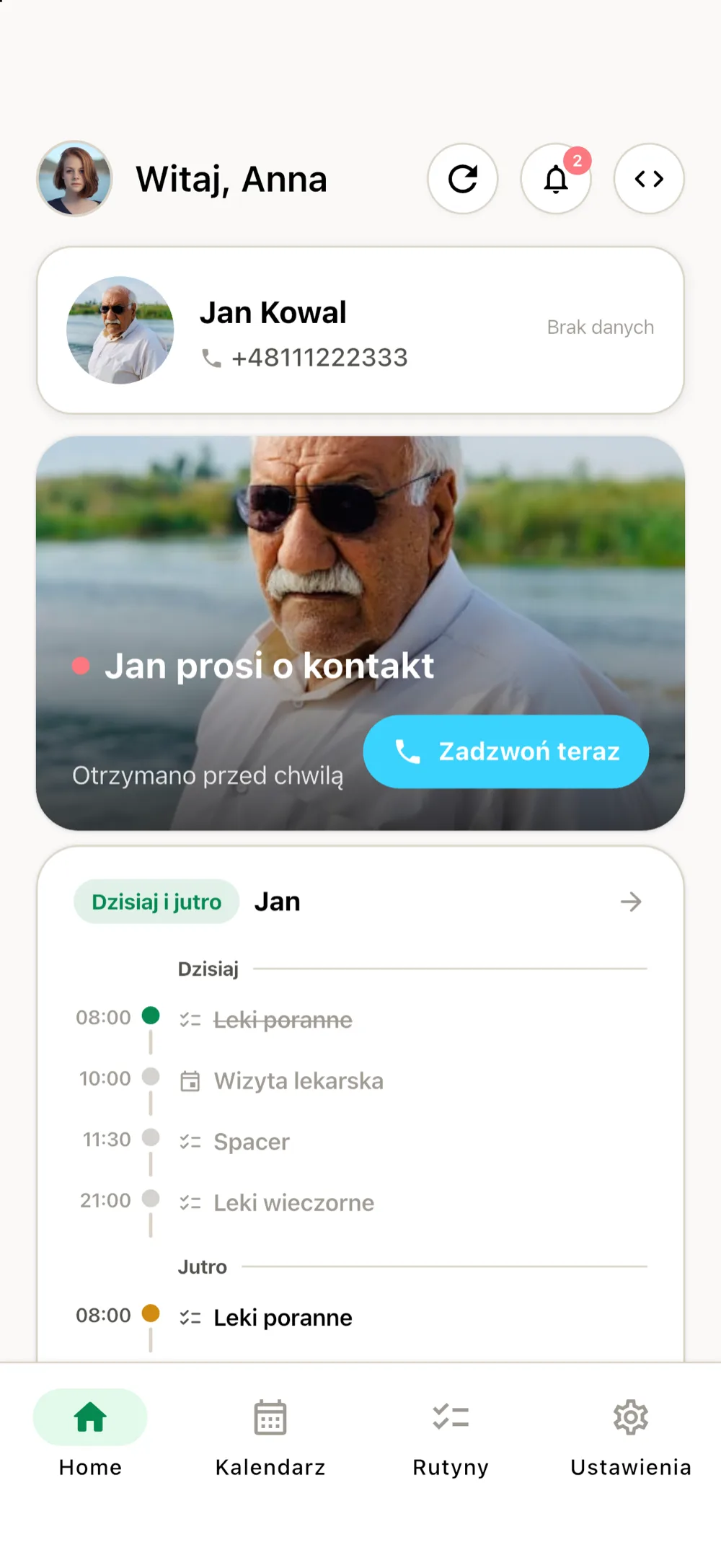
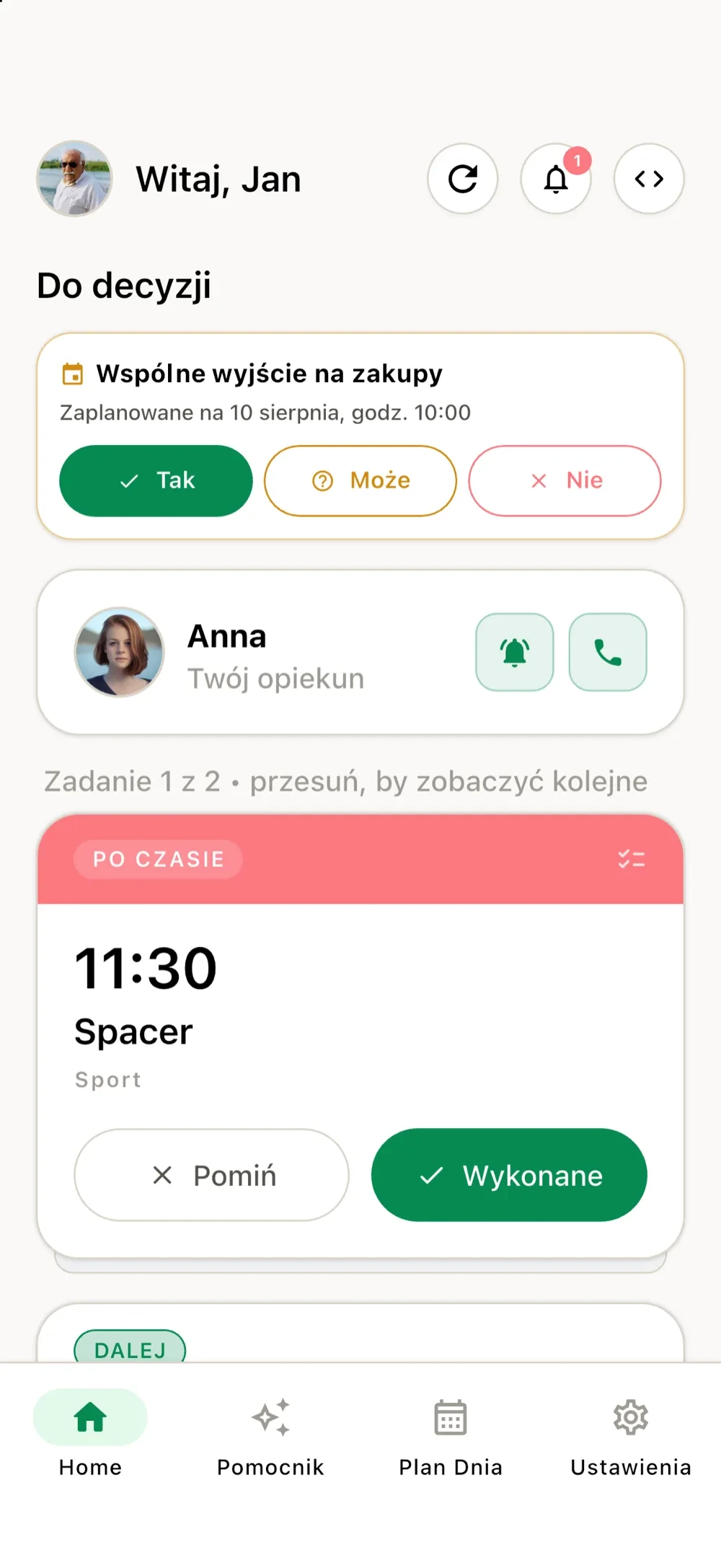
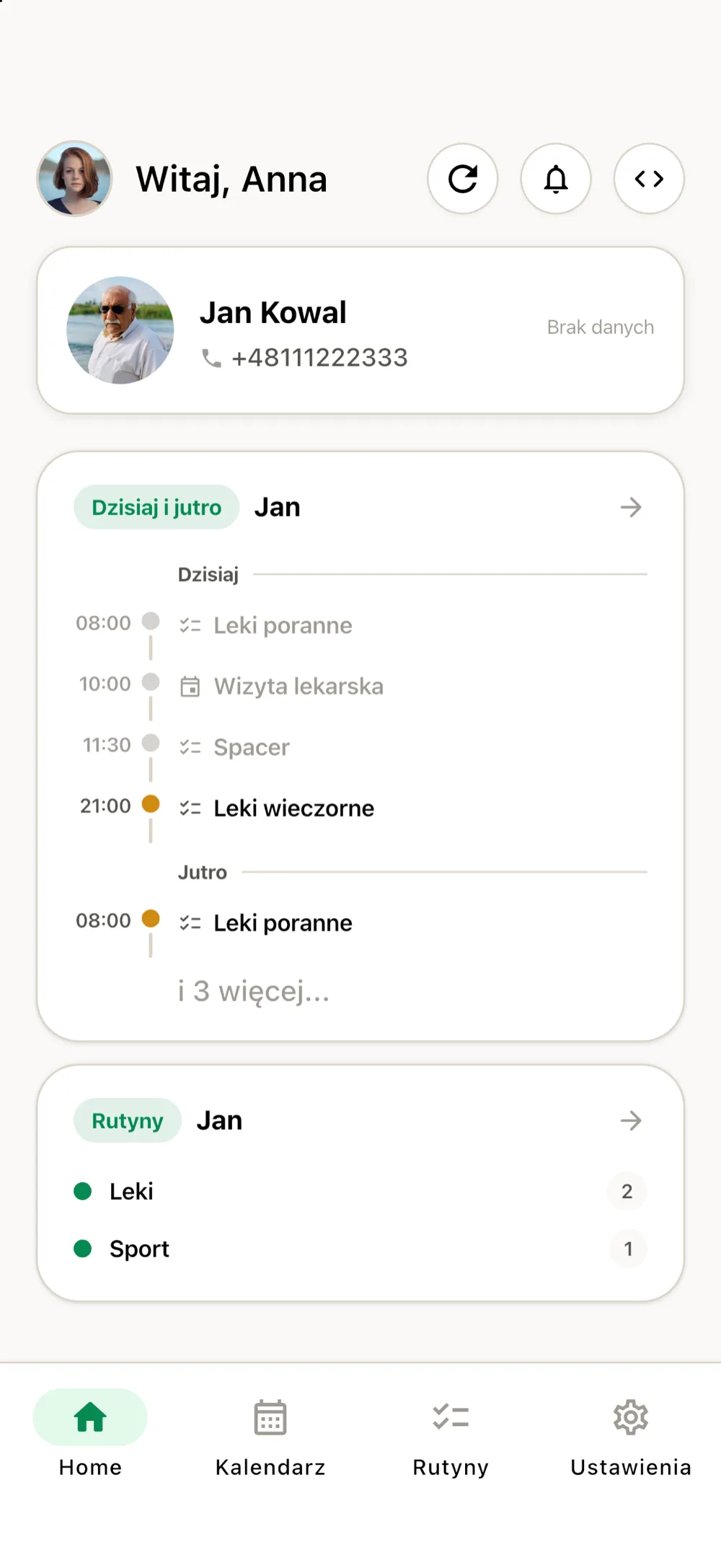
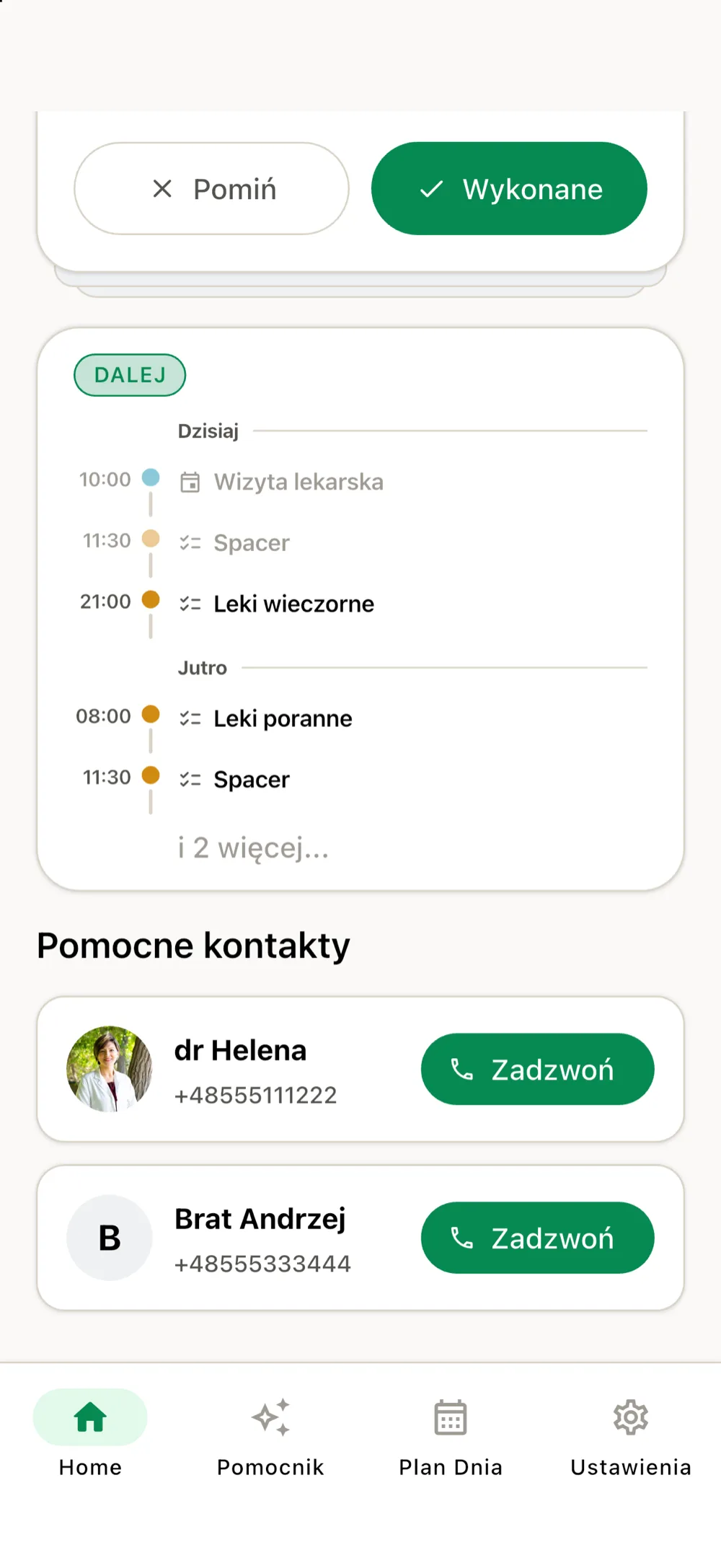
Let's be close (BądźmyBlisko) is an app for a senior and their caregiver. The senior requests contact with one tap — the caregiver calls back when they have time. No stress on either side.
A project of Fundacja Wschodzące Słońce
Janek — Senior
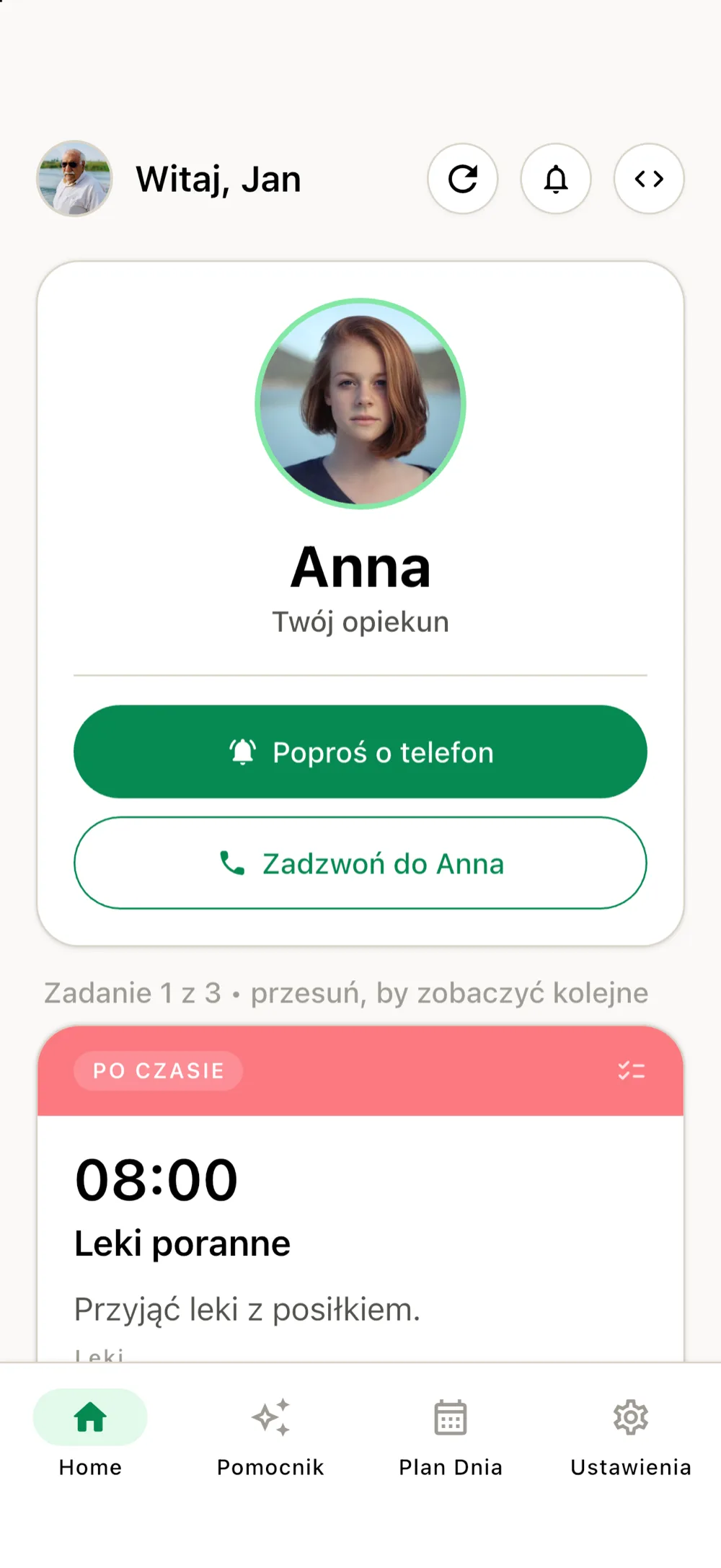
Anna — Caregiver
Short video
Why it matters — the research
Instead of control — trust. Instead of constant questions — discreet signals. The care recipient gains independence, the caregiver gets peace of mind and less stress.
“I don't have to explain myself.”
The care recipient decides for themselves when to reach out. A simple interface, zero
pressure. Support without feeling controlled.
“I don't call just to check up on them.”
You can see that everything's fine. You call to talk — not to check. A relationship free
from stress.
We didn't design Let's be close on guesswork. We tested the interface with seniors and their caregivers — watching what worked and what caused friction. The result: a simple, legible design a senior can operate without help.
User research confirmed that seniors find the key features on their own — no instructions, no frustration.
No jargon, no tiny icons. One screen, one task — that's what Let's be close looks like on the senior's side.
Instant communication and everyday routine support in one place. The care recipient sends a signal with one tap, and you have the certainty that the relationship runs on trust, not control.
Communication
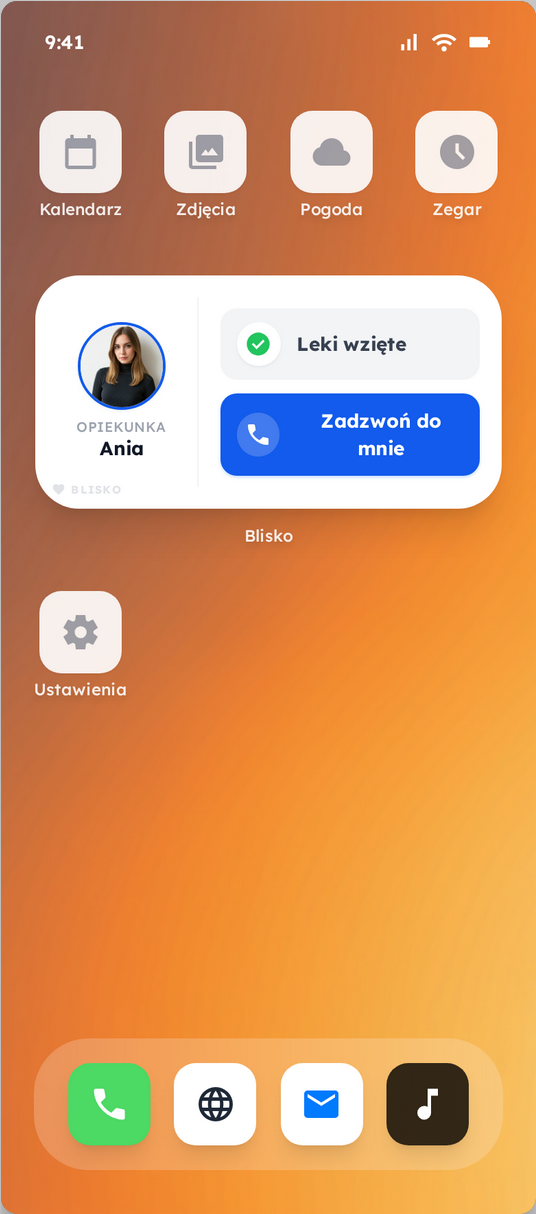
A widget on the home screen. One tap, no hunting for the app.
You know instantly when contact is needed. The care recipient feels safe, without worrying that they're "bothering" anyone — at any age.
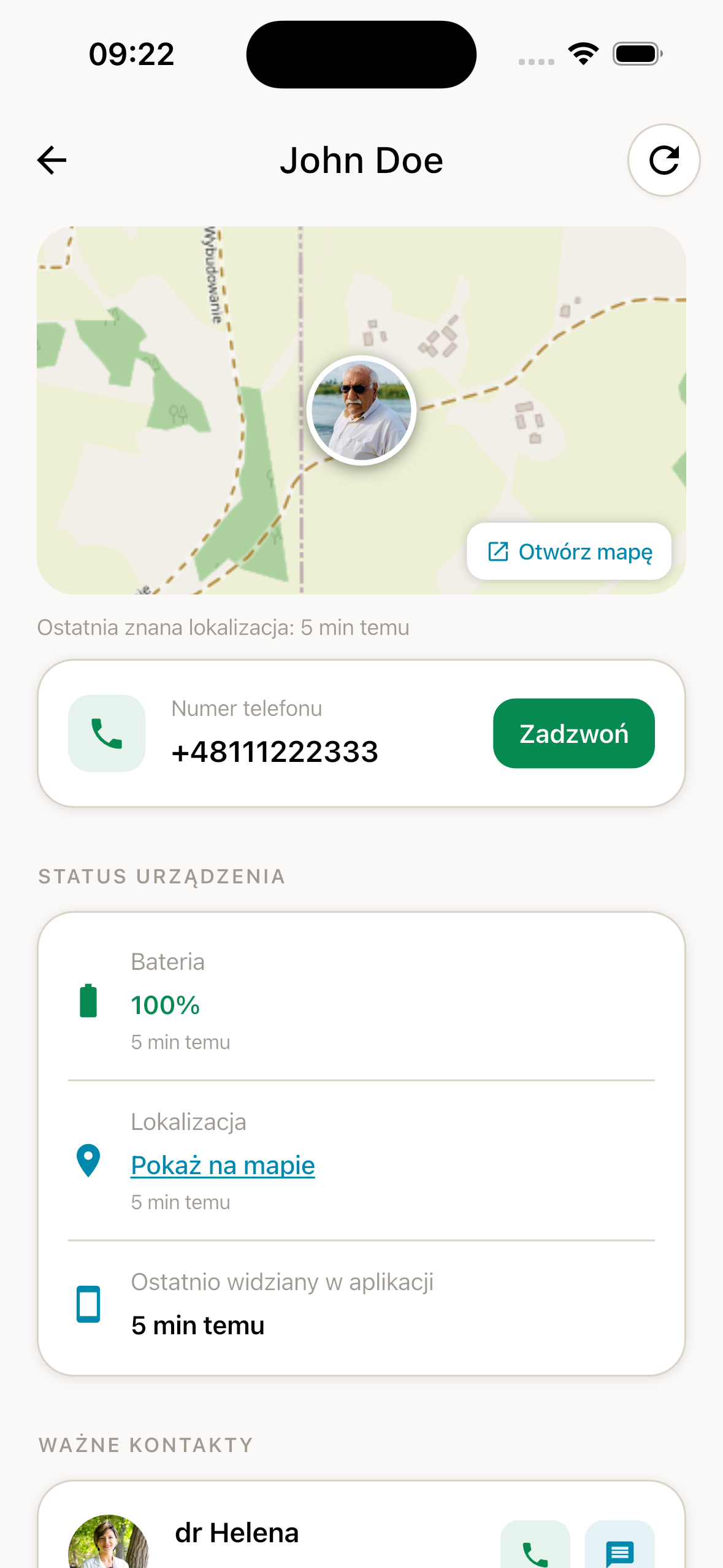
Doctor, neighbor, brother — the most important numbers always on one screen. One big "Call" button, no digging through a phone book.
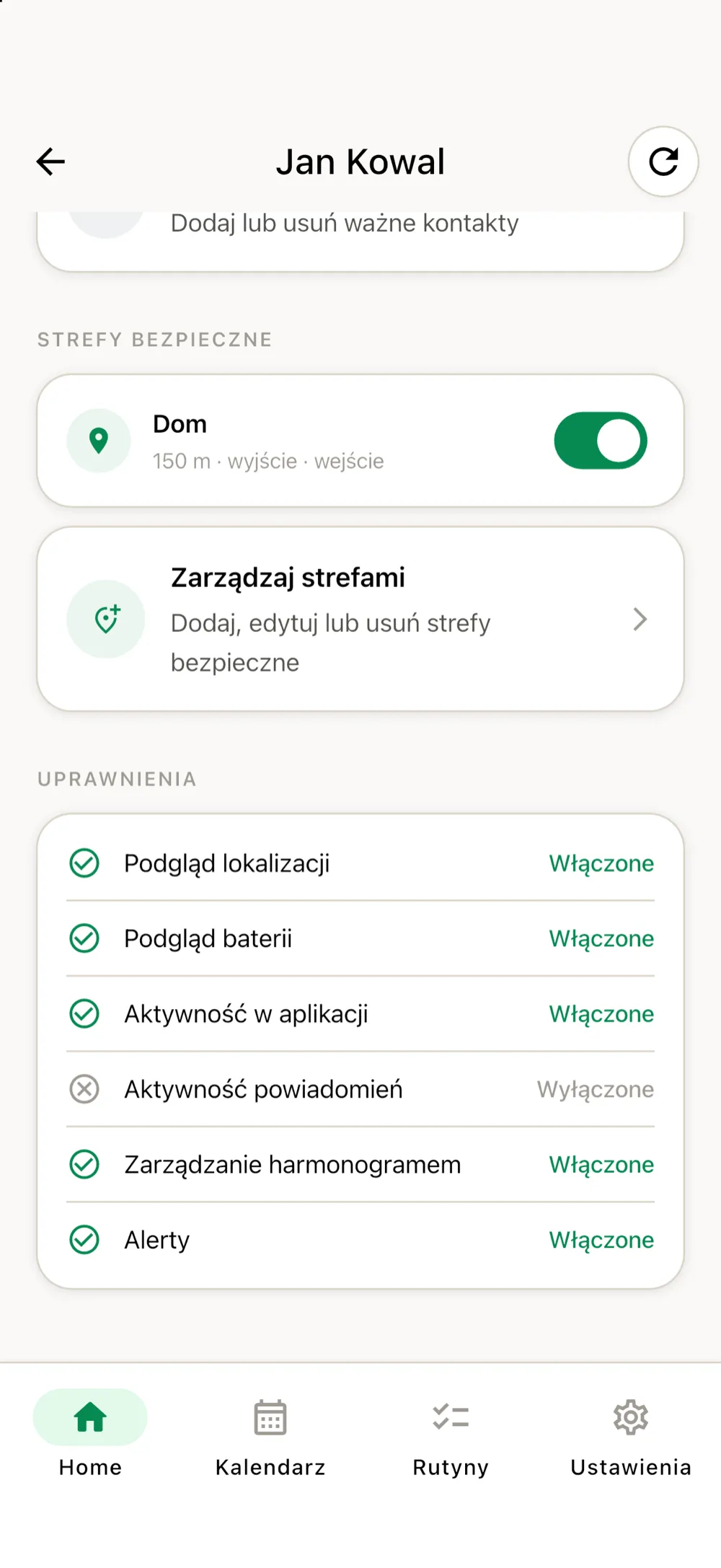
You decide what you see. Location, battery, activity — every permission can be switched on or off. Trust instead of surveillance.
Safety net
"I know where my loved one is."
Location is hidden by default — we respect privacy.
But when the care recipient asks for help or leaves a safe zone, you get their exact
location. Works for seniors and children who need discreet care.
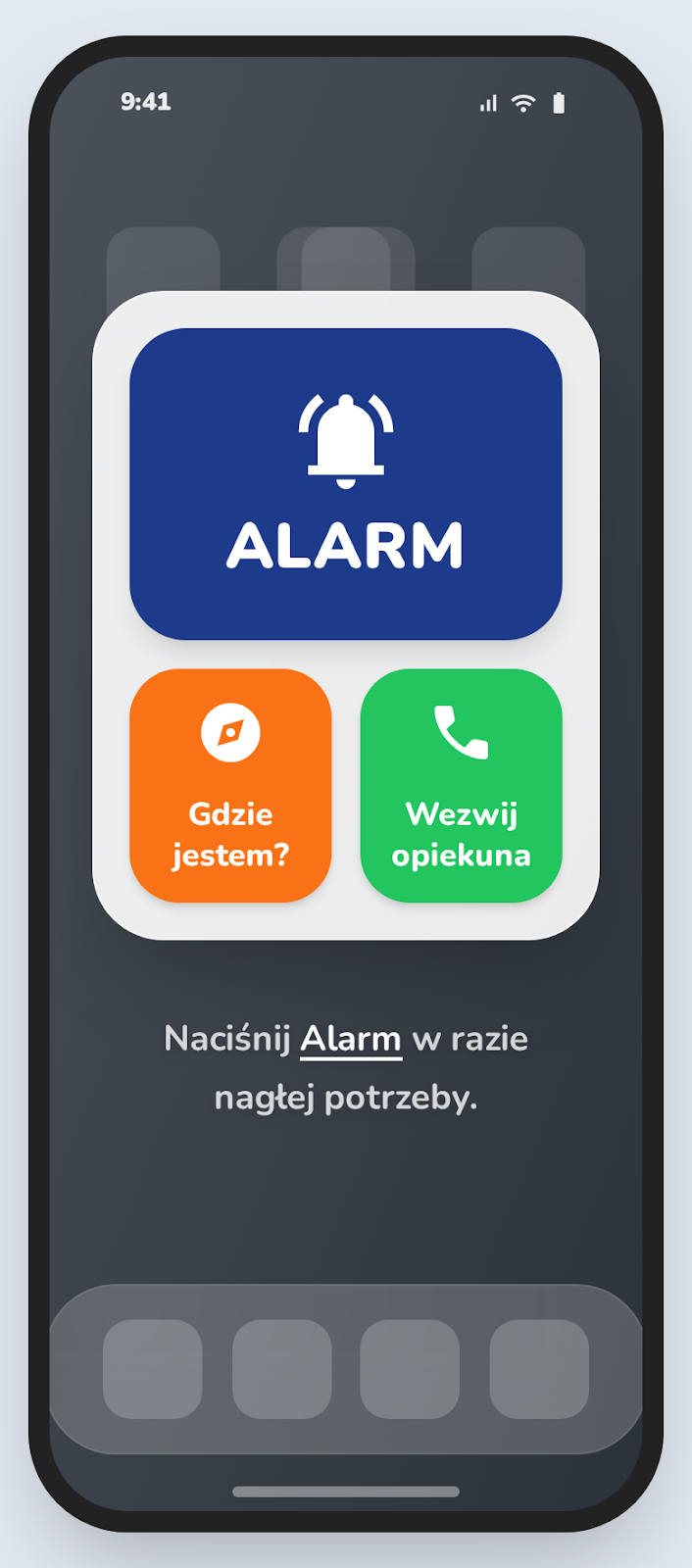
Two big buttons on the home screen: "I need help" and "Call me." The care recipient doesn't have to search through a menu. This simple solution gives them a sense of agency — help is within reach, but the initiative stays with them.
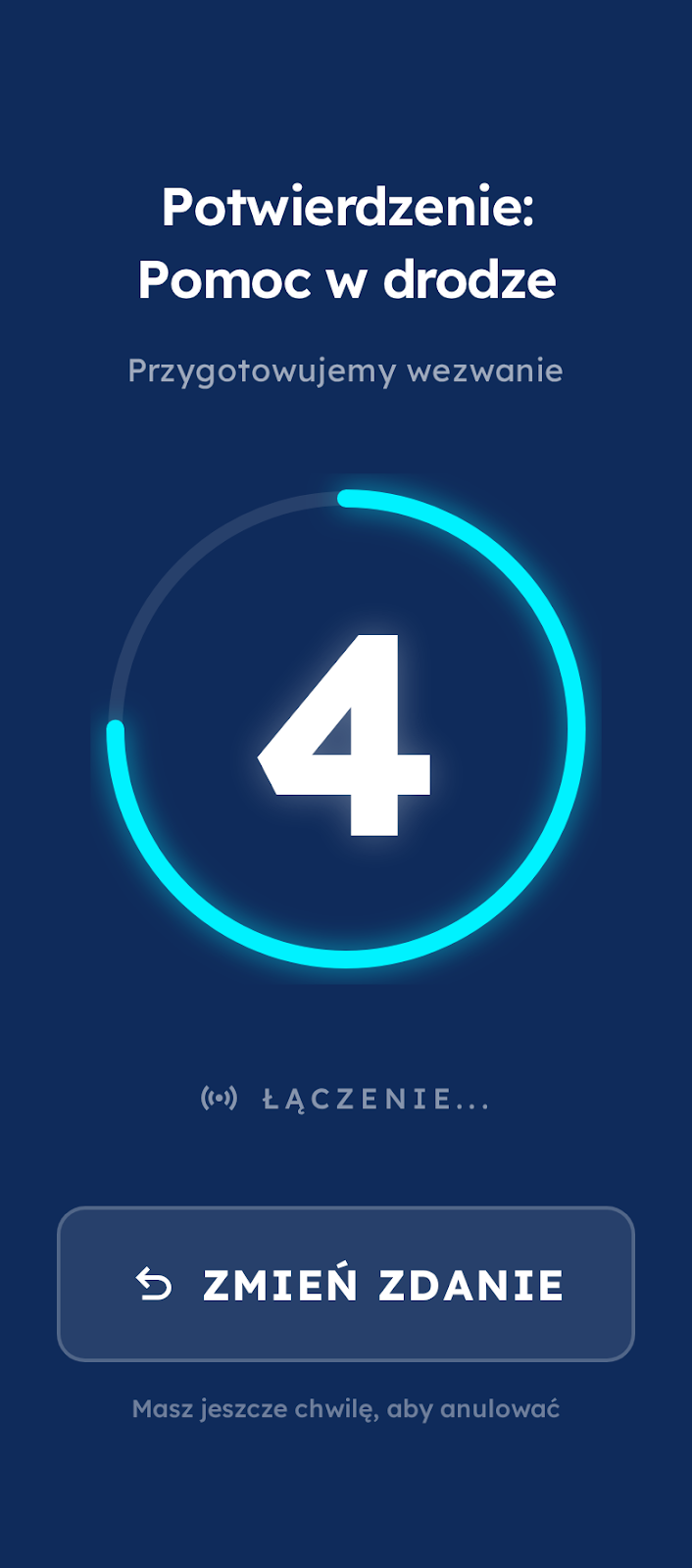
The confirmation screen reassures the care recipient that the signal was sent and the caregiver notified. A clear "Help is on the way" message gives peace of mind, and the caregiver a clear picture of the situation. Technology that cares about the emotions on both sides of the caregiver–care recipient relationship.
Safe zones
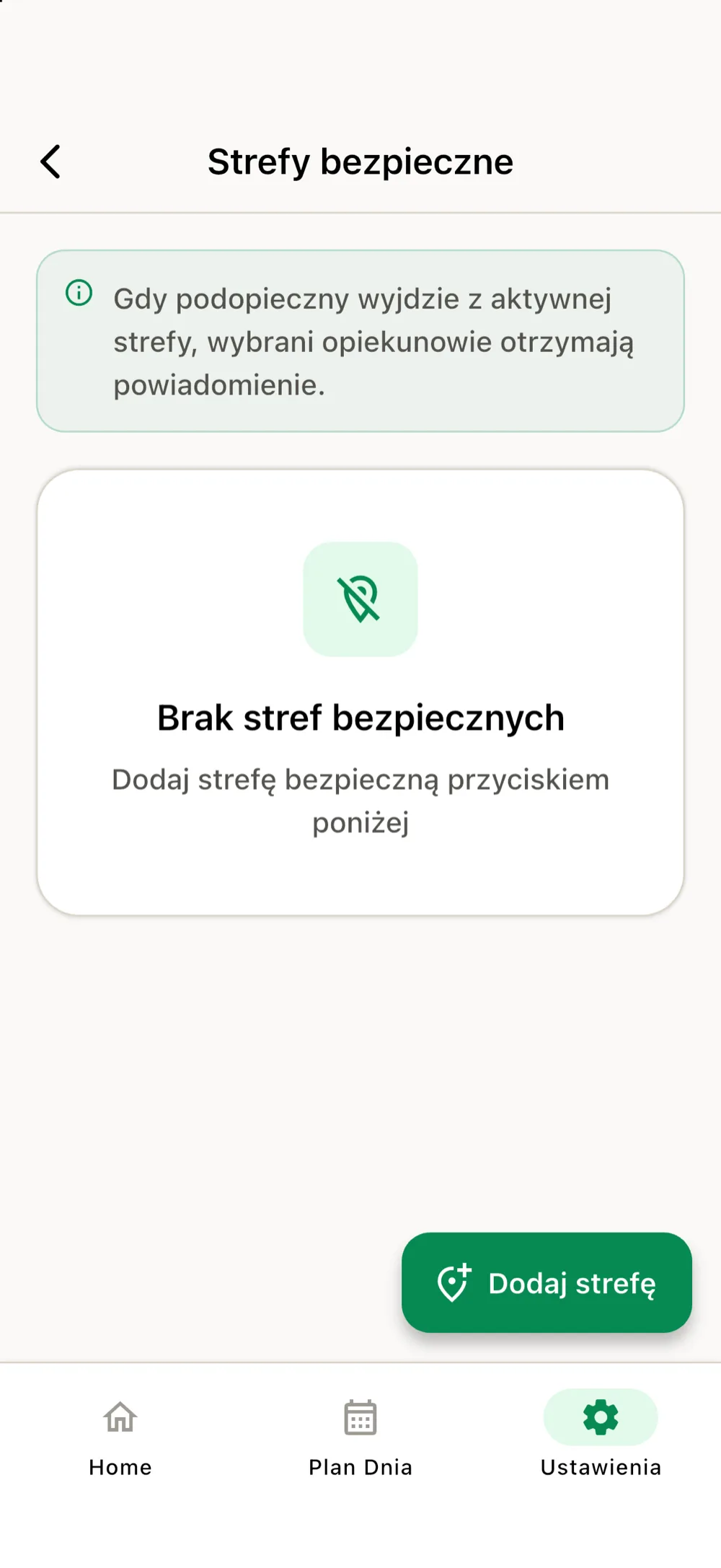
NewYou mark the places on the map that are safe for you both — home, a garden, a clinic. As long as the care recipient stays inside, no one checks up on them. A notification only arrives when they leave the zone or return to it.
Home, a garden, a clinic — you point to a place and a radius (e.g. 150 m). Every zone switches on and off with a single toggle.
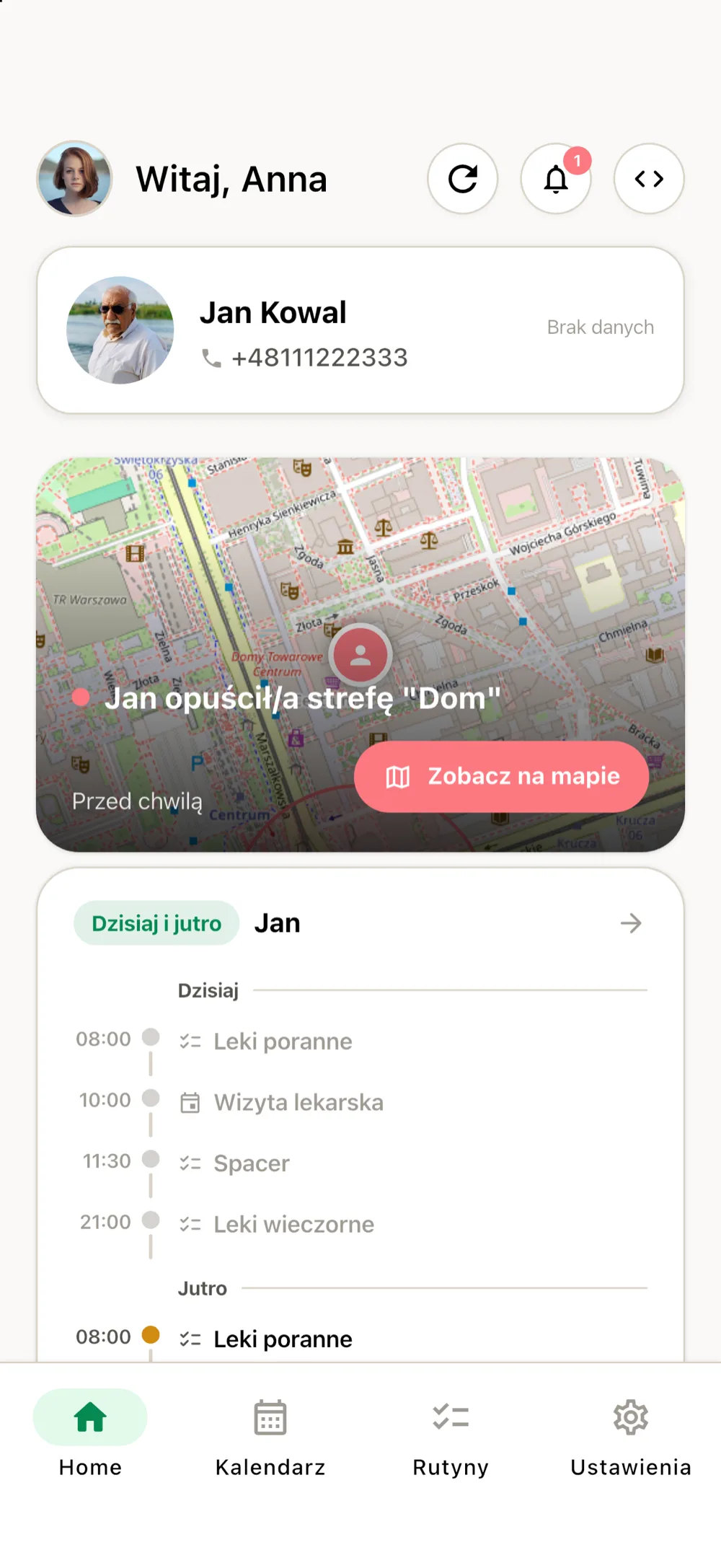
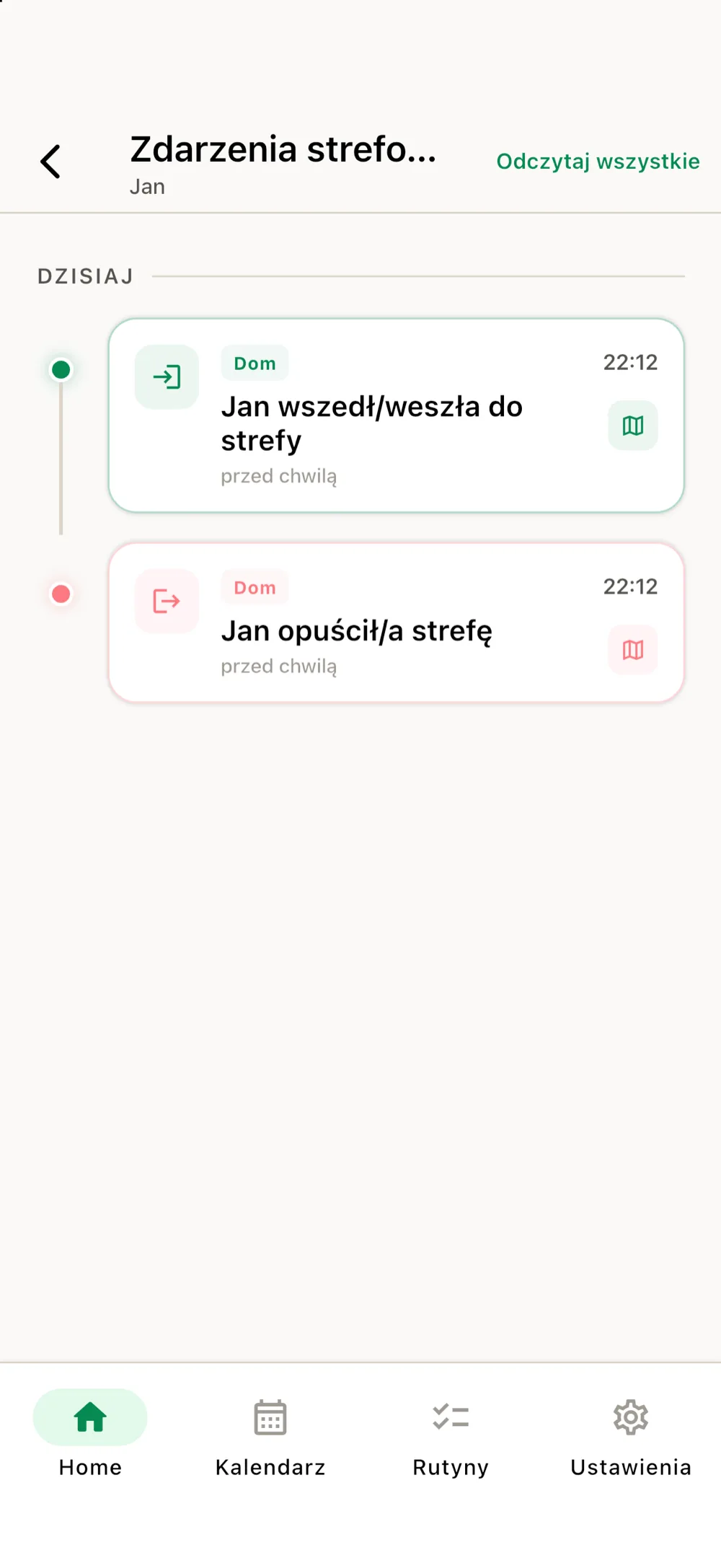
"Jan left the Home zone." One glance at the map instead of a string of phone calls — especially important with dementia-related conditions and with children.
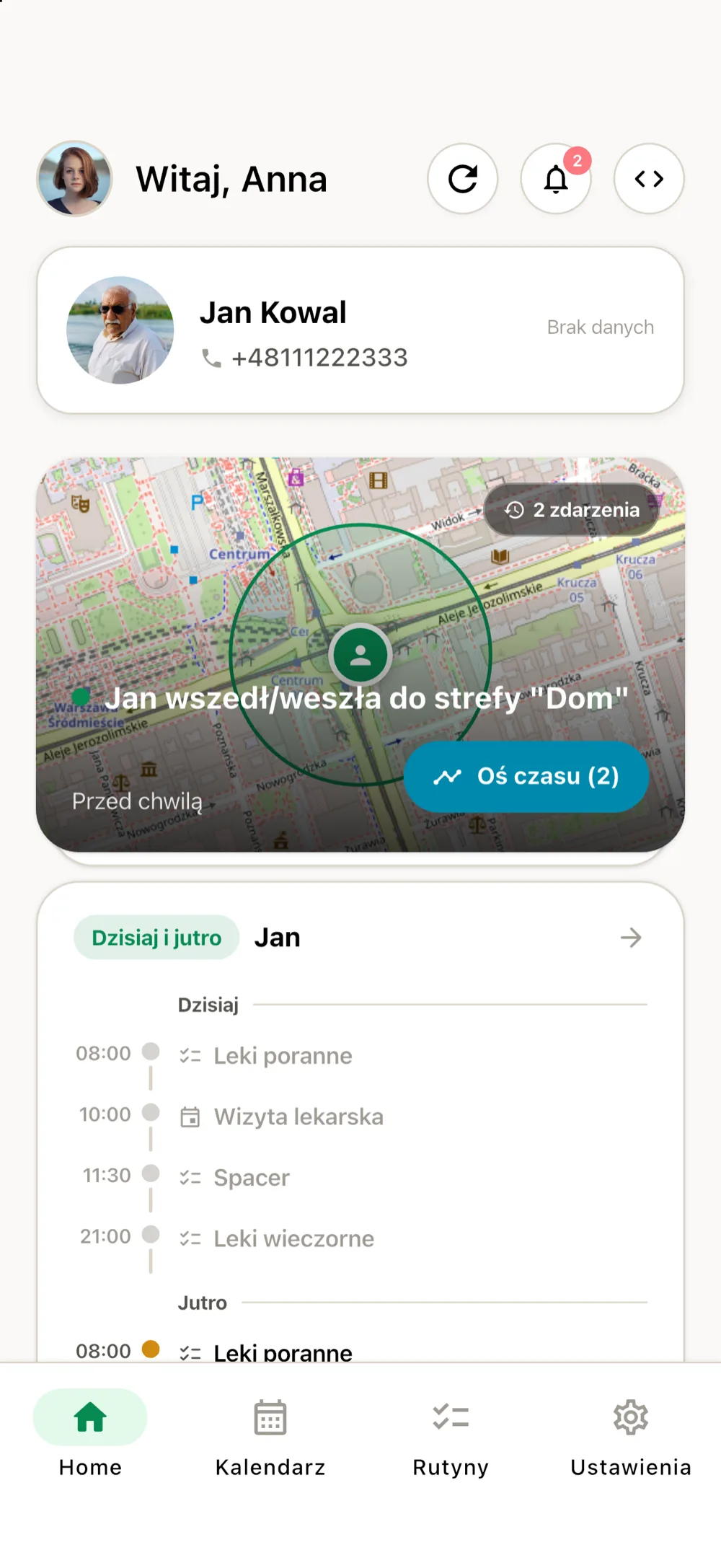
Returning to the zone is a signal too — this time a green one. You don't have to wait by the phone wondering if they've arrived.
Departures and returns line up in a simple list with timestamps. Instead of constant live tracking — a short summary whenever you have a moment.
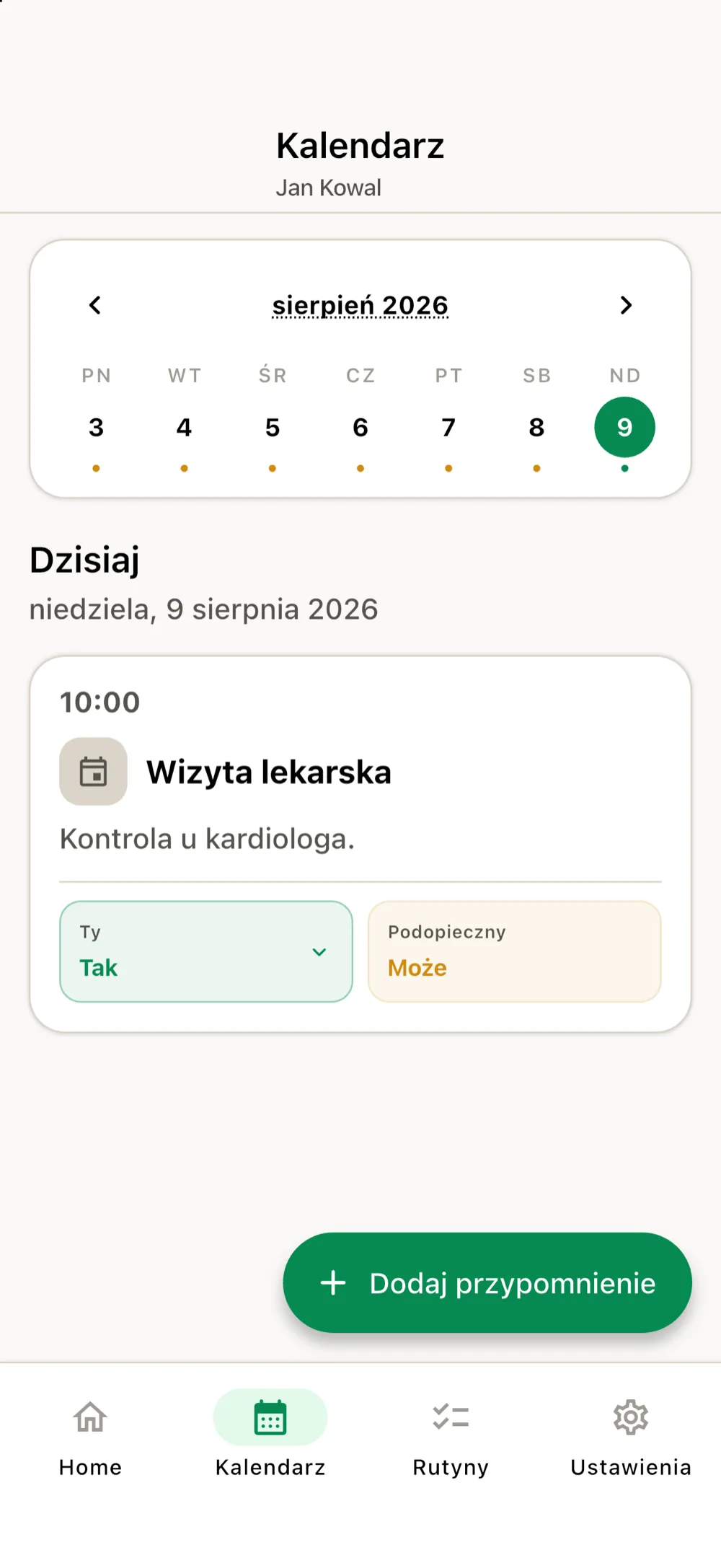
You add visits, tasks and reminders in your own app. They automatically appear for the care recipient as a clear plan for the day. For seniors, that's memory support. For neurodivergent children, it's a key element of therapy: predictability and routine reduce anxiety and improve functioning.
“Cardiologist appointment, 2:00 PM”
A simple list, large text, no extra options.
Routines & shared plans
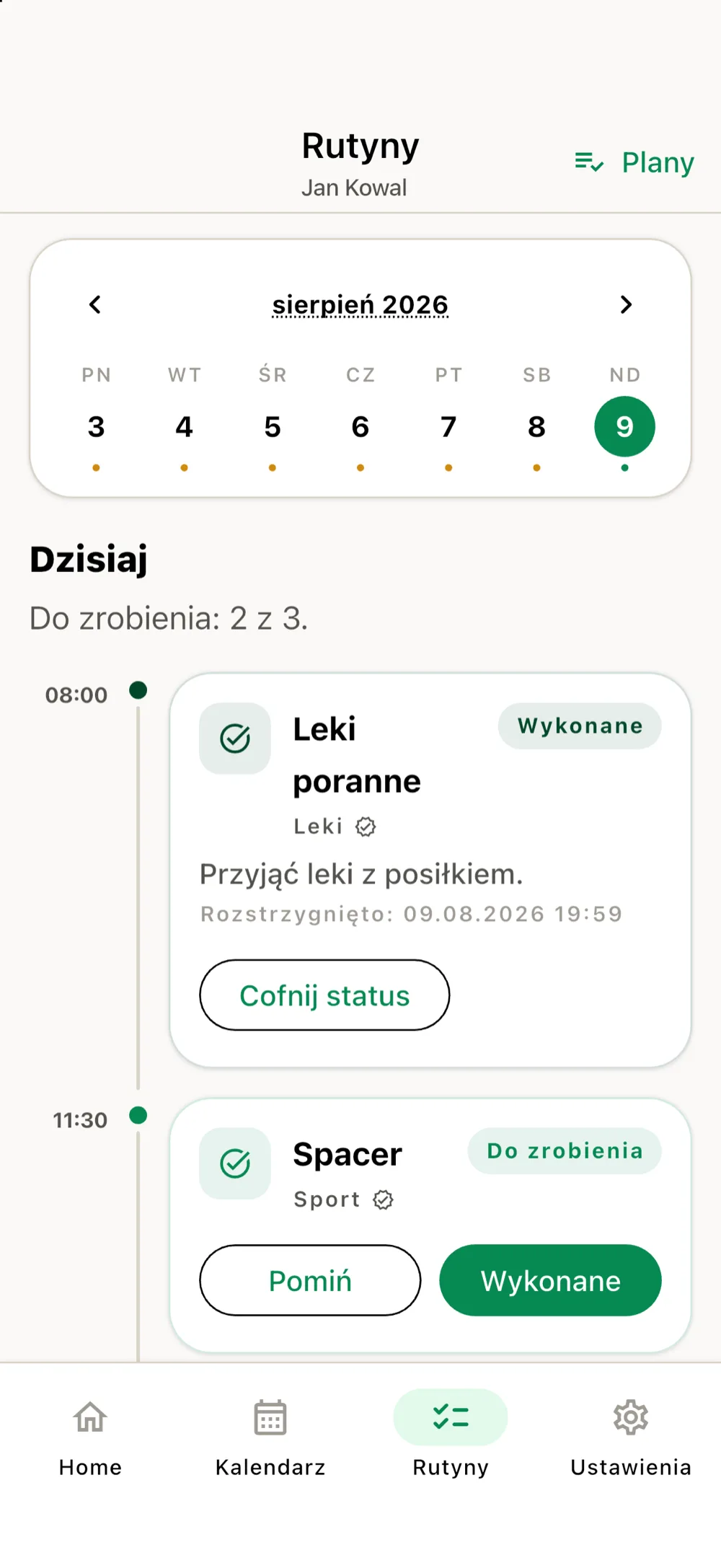
Medication, a walk, exercise — recurring tasks line up along the day's timeline. The care recipient checks them off with one tap: Done or Skip. You see the status, so you don't have to call to check up.
You propose a shared outing, and the care recipient answers with one tap: Yes, Maybe, or No. No explaining themselves and no awkward phone calls — both sides know where they stand right away.
A caregiver isn't available around the clock — and doesn't need to be. The AI Companion is a gentle conversational partner on the care recipient's phone: it asks how they're feeling, brings up old memories, offers suggestions. Because silence in an empty home can be the hardest part.
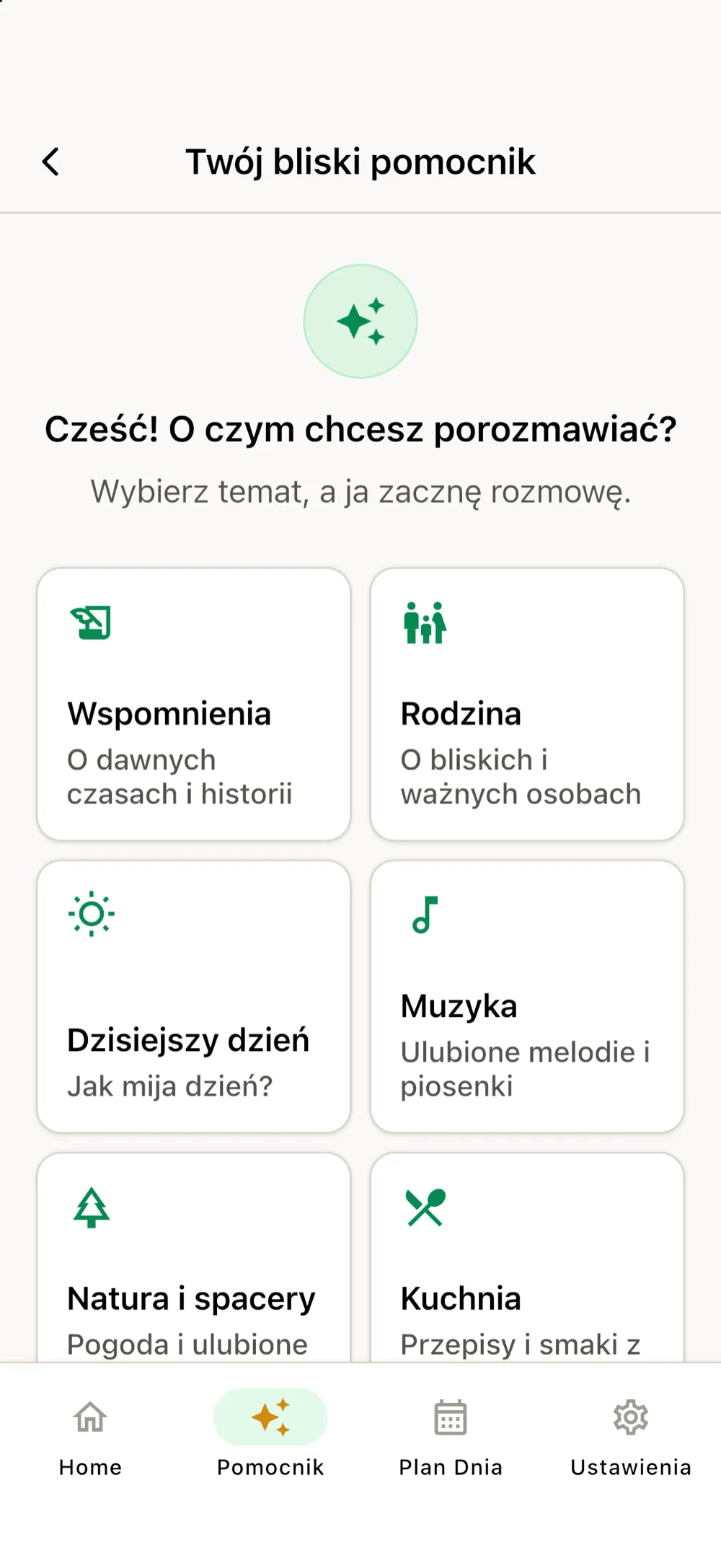
Memories, family, music, cooking, nature. The senior doesn't have to figure out "what to say to a computer" — just tap a tile, and the companion starts the conversation.
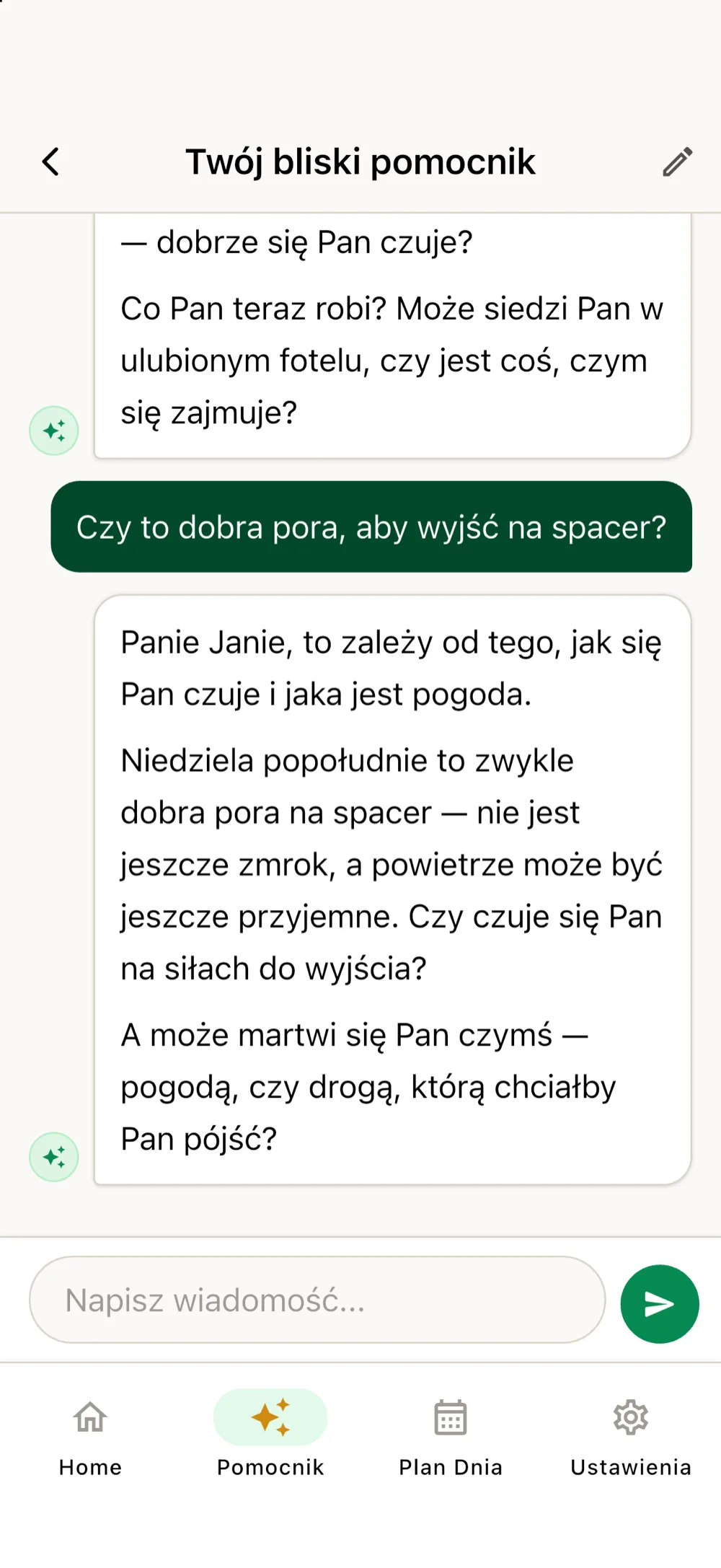
"Mr. Jan, that depends on how you're feeling" — the companion asks, listens, and replies in calm, simple language. No jargon, no rushing, no judgment.
The companion asks the first question. For someone who hasn't exchanged a word with anyone all morning, that's the difference between "I don't know what to say" and an ordinary conversation.
Large type, a courteous tone, a calm pace. The same simple interface we tested with seniors — except this time, someone answers on the other side.
The companion isn't a doctor or a caregiver, and it doesn't pretend to be human. When something matters, it points to family — the "Request a call" button is always one tap away.
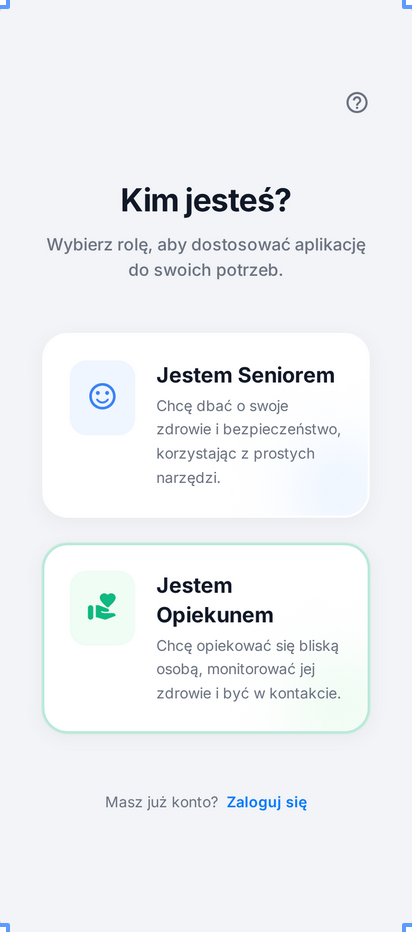
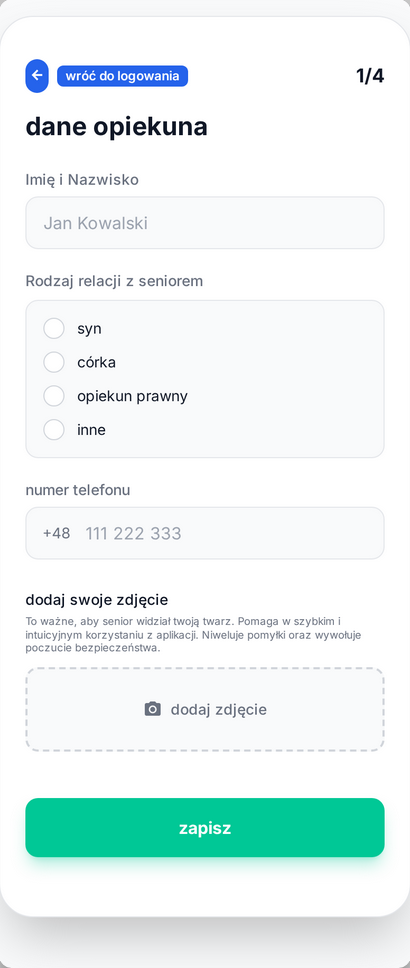
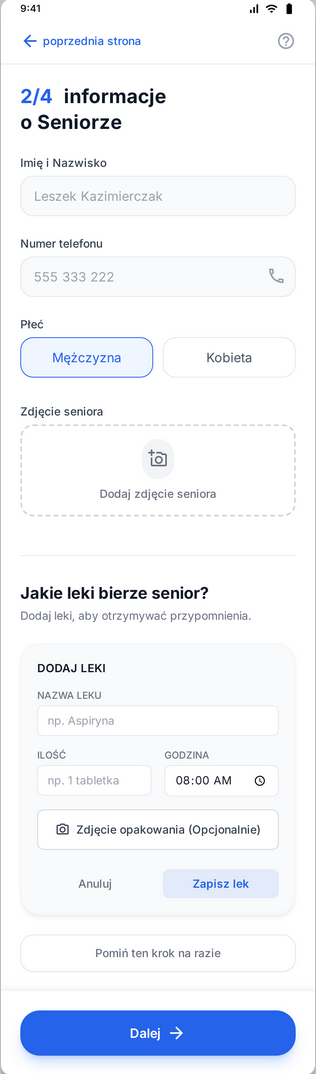
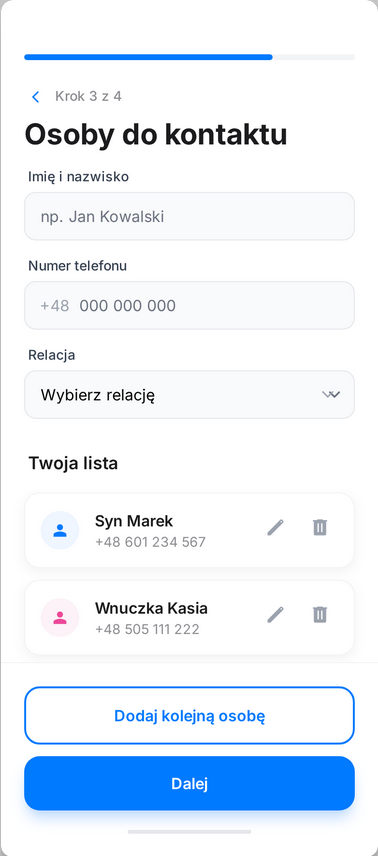
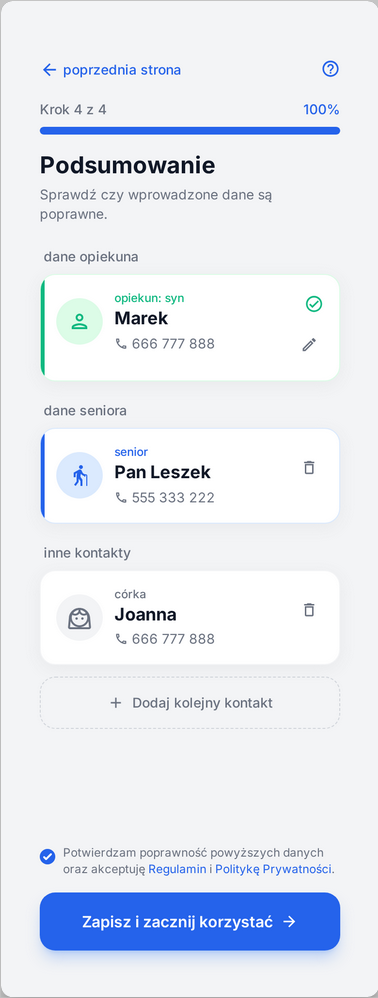
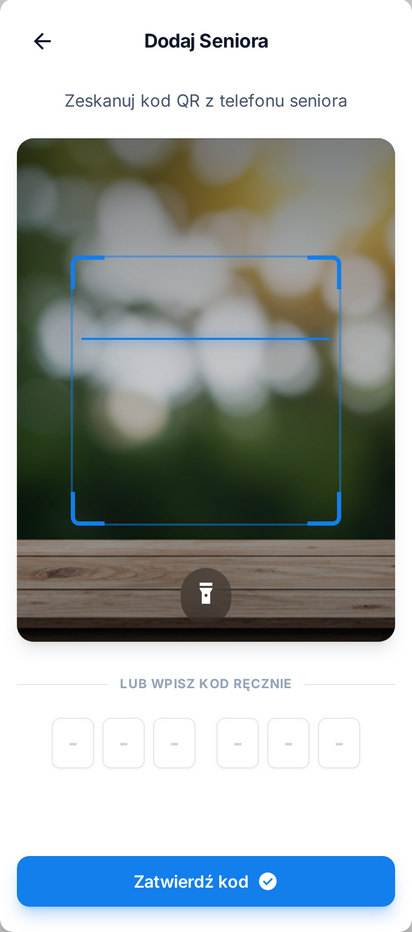
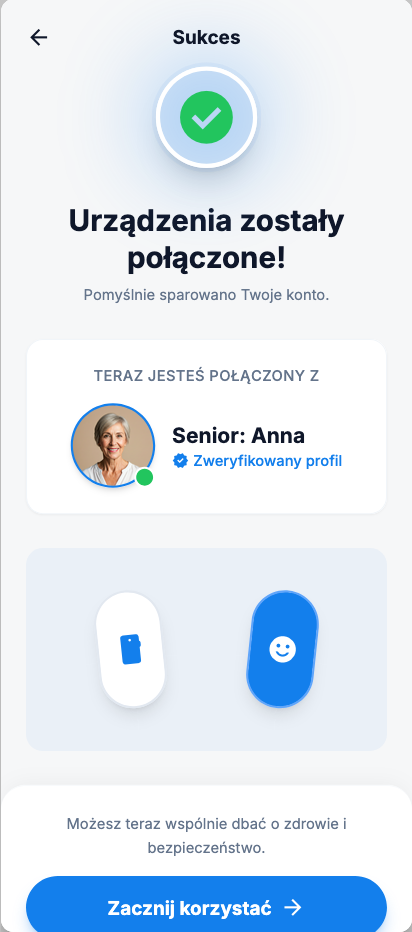
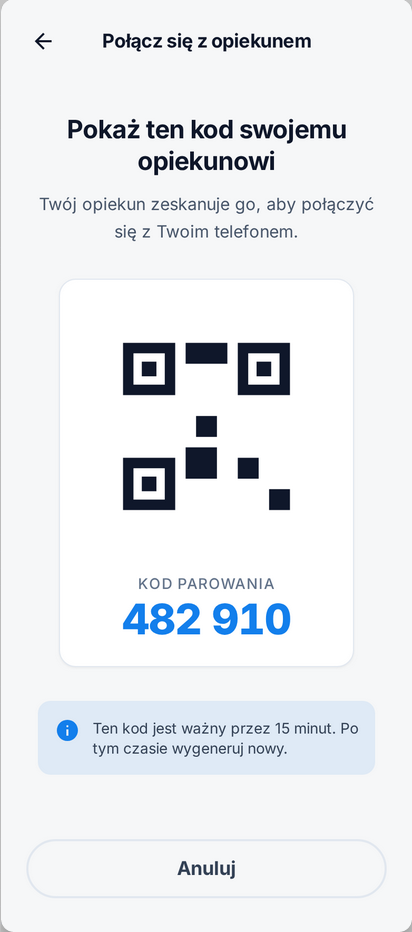
See how simple setup is — you and your loved one's phones ready in 3 minutes! The process is friendly and intuitive. Choose the path you want to see:
Install the app and launch it.
One big button to get started.
The code links you together securely.
We're looking for families and institutional partners — foundations, non-profits, and care facilities — who care about the mental health of caregivers and those they care for. ⏳ We invite foundations and organizations working in mental health to partner with us.
Questions? Email us: fundacja@wschodzaceslonce.org.pl
Let's be close is being built in close collaboration with families — of seniors and of children with neurodevelopmental needs.
"The constant worry was the worst part. With Let's be close I know Mom is active and doing well — without having to call all the time. Our relationship has improved."
"One button and my daughter knows everything's fine. I feel like she's watching over me, not controlling me."
"Olek needs a steady routine. Let's be close helps him see the day's plan and check off tasks himself. We argue less, and he's proud he can manage on his own."
Check out our other apps that support everyday life.
See what else we have on Google Play.
Innovation happens where technology meets empathy. Meet the organizations behind Let's be close.
Since 2018 we've supported intergenerational relationships and families' mental wellbeing through technology. Let's be close is our flagship project, connecting senior caregivers with families of children with neurodevelopmental needs.
Developing a caregiving volunteer network and organizational support.
Pilot rollout in public institutions and community care.
Oversight of mental health modules and caregiver relationship support.
Expert consultation on long-term care and neurodevelopmental support.
Join the consortium.
Want to join our strategic partners?
Contact the Foundation's Development Team ✉Have questions? Check the answers to the most common questions about the app and the pilot.
No, participating in the pilot program is completely free for the first 100 families. Your feedback matters to us as we refine the app.
Just two smartphones: one for the care recipient (Android or iOS) and one for the caregiver. The app doesn't require any extra hardware, wearables, or cameras.
Absolutely. Let's be close doesn't spy, record calls, or transmit video. We only analyze activity patterns (like phone movement or battery charging) and send signals only to the designated caregiver. Data is encrypted.
A safe zone is a place marked on the map with a radius — for example, home within 150 m. The difference from tracking is fundamental: as long as the care recipient stays inside the zone, no one checks exactly where they are. A notification only appears when they leave the zone or return to it. Each zone can be switched off with a single toggle, and the care recipient knows when it's active.
It doesn't replace — it complements. The AI Companion is a conversational partner available whenever the caregiver happens to be working or asleep. The care recipient picks a topic (memories, family, music, cooking), and the companion leads a calm conversation in simple language. It doesn't give medical advice and doesn't pretend to be human; for anything important, it directs the person to family or a doctor. The "Request a call" button is always one tap away.
Yes! The care recipient mode is as simple as possible — practically maintenance-free. It runs in the background, and the screen shows just one big button to request contact. For children with neurodevelopmental needs, the interface supports predictability and routine.
Yes. Let's be close also supports families of children with neurodevelopmental needs (e.g. ASD, ADHD). Day planning, reminders, and confirmations help build the child's independence and reduce tension at home.
Let's be close reduces the need for constant checking and monitoring — the caregiver gets discreet signals about their loved one's activity, which lowers anxiety and stress. Research shows that 40–70% of caregivers experience burnout symptoms. Our goal is to ease that burden.